Discovering Homeopathy’s Role in Squamous Cell Carcinoma
Discovering Homeopathy’s Role in Squamous Cell Carcinoma
Discovering Homeopathy’s Role in Squamous Cell Carcinoma
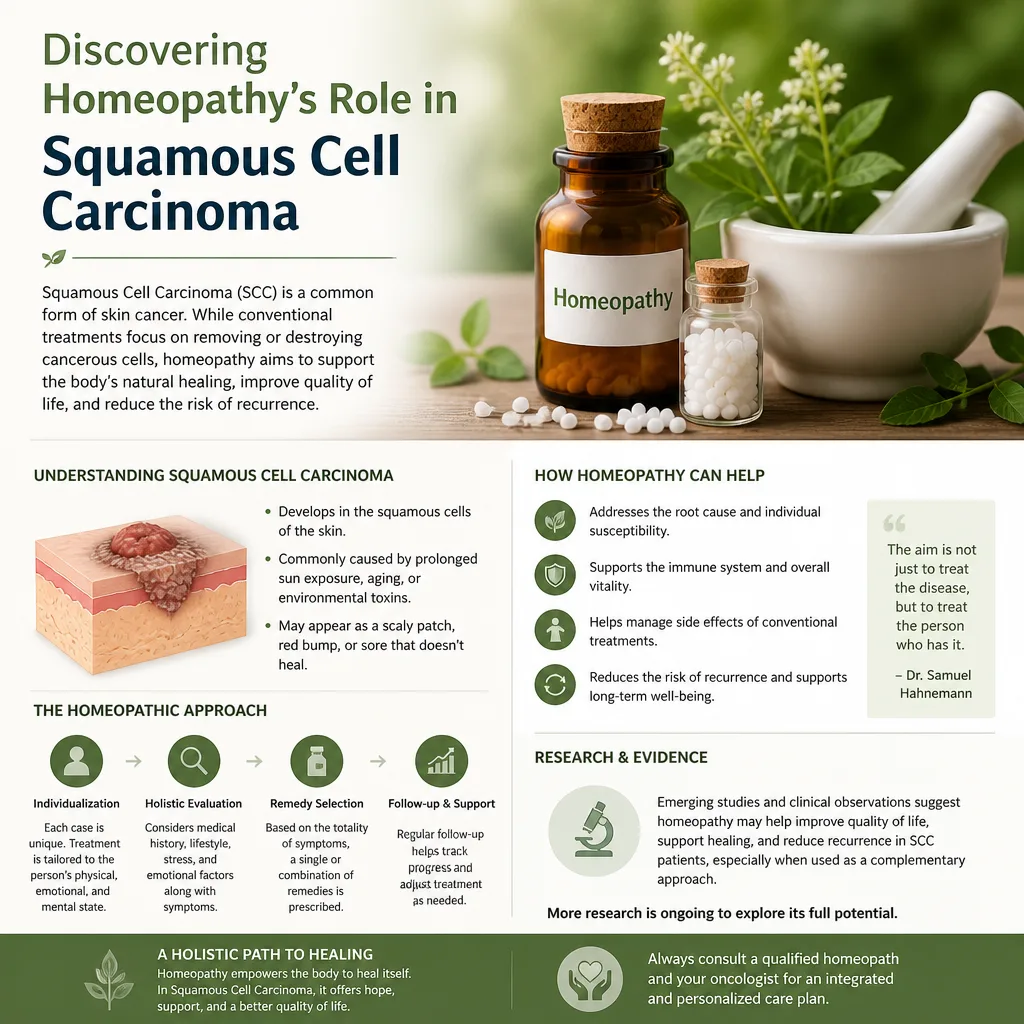
Squamous cell carcinoma (SCC) is among the most common types of skin cancer. It occurs in the thin, flat cells that make up the outer layer of the skin. Although SCC can often be treated successfully with conventional approaches such as surgery and radiation, the journey for those affected by SCC can be fraught with emotional and physical challenges.
As patients and their caregivers look for ways to navigate their treatment paths, more and more are seeking holistic options that seek to support the body’s innate healing abilities. One of the most interesting of these is homeopathy, a system that focuses on individualized care and the body’s natural ability to heal itself.
Examining the role of homeopathy in squamous cell carcinoma can offer new insights into how holistic treatments complement traditional care. Homeopathy, with its core values of treating the whole person rather than just symptoms, has the potential to relieve discomfort and improve overall well-being.
In the sections below, we will explore how homeopathy complements conventional cancer therapies, the specific remedies that may offer relief, and the inspiring stories of those who have found comfort in its approach. Join us as we explore homeopathy’s potential to fight SCC and discover new hope on the road to healing.
Introduction to Squamous Cell Carcinoma
Squamous cell carcinoma (SCC) is a skin cancer that develops from the squamous cells. These are flat cells found in the outer layer of the skin, lining the respiratory and digestive tracts, and covering many organs.
SCC may take various forms, including cutaneous SCC, which arises in the skin, and the more aggressive forms, such as mucosal SCC, which may arise in the mouth, throat, and genitals. This type of cancer is the second most common form of skin cancer after basal cell carcinoma and is notorious for its ability to spread if not caught in time.
The development of SCC is associated with several common causes and risk factors. A major risk factor is long-term exposure to ultraviolet (UV) radiation from the sun that damages DNA in skin cells. Other factors that contribute include fair skin, a history of sunburns, exposure to caustic chemicals, and conditions such as immunosuppression or precancerous lesions.
Furthermore, people who have a family history of skin cancer may be at an increased risk. Since over 90% of SCCs are attributable to UV exposure, awareness of these factors is important for preventing and identifying SCCs early.
Patients diagnosed with SCC may experience a variety of symptoms, often beginning with changes in the appearance of the skin or mucous membranes. This can include a persistent, scaly patch, an ulcer that doesn’t heal, or a wart-like growth.
Diagnosis usually includes a physical examination and a biopsy, in which a sample of the suspicious tissue cells is examined under a microscope to confirm the presence of cancer.
It is important to be aware of these symptoms because early detection significantly improves the prognosis and can open the door to more effective treatment options, including holistic healing modalities that look at the whole person rather than just the illness.
Since SCC is a complex disease with multiple types and risk factors, patients, caregivers, and clinicians should be aware not only of the available medical treatments but also of complementary therapies, such as homeopathy.
Such holistic healing modalities can be important in managing symptoms, improving mental health, and enhancing overall quality of life during the cancer journey. Taking a multi-dimensional approach to care can help individuals find a more balanced path toward healing and resilience.
Homeopathy for Cancer Treatment
Homeopathy’s theory is that “like cures like”—that the symptoms produced by a substance in a healthy person can be used to treat similar symptoms in a sick person, but in a highly diluted form. This holistic strategy aims to treat the whole person rather than the individual condition.
Homeopathic remedies are prepared by a process of dilution and succussion (vigorous shaking) and can be used for cancer patients, including those with squamous cell carcinoma (SCC). The goal of this approach is to enhance the therapeutic efficacy and reduce the side effects of traditional cancer therapies, thereby providing a gentler alternative.
One of the key differences between homeopathy and standard cancer therapies is how they approach care. While conventional approaches tend to focus on treating specific symptoms or cancer cells themselves, homeopathy emphasizes individualization and identifying the root causes of distress.
A holistic practitioner, for example, might take into account a patient’s emotional state, lifestyle, and overall health when choosing remedies. This is especially true for patients with SCC, as psychological well-being can significantly impact overall health outcomes throughout cancer treatment.
Adding homeopathy to conventional care can bring a number of benefits. Many patients describe that using these approaches together improves symptom management, with fewer side effects from chemotherapy and radiation.
Homeopathy can also help with the anxiety and stress associated with cancer treatment, encouraging a feeling of calmness and resilience. The integration of homeopathic and conventional methods empowers patients to become active participants in their healing process, fostering a more personalized approach to care that aligns with their specific needs and preferences.
When using homeopathy with conventional treatments, patients are advised to be forthcoming with their healthcare providers. This team approach helps to ensure that all components of the treatment are coordinated, minimizing risks and maximizing chances of a positive outcome.
By using the principles of homeopathy, SCC patients can have an opportunity to find healing in mind, body, and spirit, which can improve their quality of life during a difficult period.
Homeopathic Remedies for Symptom Relief
Homeopathy offers a number of remedies that can be helpful in managing symptoms associated with squamous cell carcinoma (SCC). These remedies address the underlying imbalances in the body and not just the superficial symptoms.
For example, *Arsenicum album* is frequently prescribed for patients who are anxious, restless, or fearful of disease, especially during cancer treatment. Similarly, *Hepar sulphuris* can be of use for painful, inflamed lesions to ease pain and assist healing.
Patients have said that homeopathic remedies are effective in providing significant relief from common SCC symptoms. For example, acute pain and inflammation may respond to remedies such as *Belladonna*, while those with dry, itchy skin from radiation therapy may benefit from *Natrum muriaticum*.
These specific methods may be helpful in relieving physical discomfort and improving overall mental and emotional well-being. Many patients share their experiences, and the holistic nature of homeopathy helps them feel more in control during a challenging time, which helps build resilience.
It is important, however, that patients seek the advice of a qualified homeopathic practitioner before beginning any remedy. Every person has their own distinct symptoms and medical history that need to be carefully thought about.
A well-trained practitioner can assess the patient’s unique symptoms, lifestyle, and emotional needs and develop a more personalized treatment plan that aligns with standard medical care. These consultations are important, as homeopathic remedies can interact with conventional treatments or may not be suitable for everyone.
To summarize, combining homeopathy with appropriate medical treatment may provide a comprehensive strategy for treating the symptoms of SCC and improving quality of life during this difficult time.
Helping patients explore such options and connecting them with experienced practitioners can create a support system to address physical and emotional challenges. Patient experiences teach us how homeopathy can meaningfully contribute to symptom management to support overall well-being as patients journey through the healing process.
Homeopathy and How It Can Help You Feel Better
Homeopathy not only reduces physical symptoms but also provides significant psychological benefits, especially for patients suffering from squamous cell carcinoma (SCC). Cancer can trigger anxiety, depression, and stress, which can make treatment and recovery more difficult.
Homeopathic remedies are specifically indicated to treat these emotional factors, producing calmness and strength. For example, *Ignatia amara* is often recommended for emotional turmoil, helping patients feel more grounded and supported during such times.
Beyond its psychological benefits, homeopathy can improve overall health during cancer treatment by encouraging the body’s own healing processes. Homeopathy is focused on treating the person as a whole, working toward balance and wellness, rather than just the symptoms.
This comprehensive strategy is important for SCC patients because it can help reduce the side effects of conventional treatments such as chemotherapy and radiation while strengthening the immune system. For example, a treatment plan that includes remedies such as *Arnica montana* can help with bruising and fatigue, allowing patients to be more active and engaged in their recovery.
Along with homeopathy, lifestyle changes are important, as they can have a significant impact on a patient’s overall health and recovery. Dietary changes, such as incorporating antioxidant-rich foods, can synergize with homeopathic remedies to enhance vitality and quality of life.
Physical activity, such as walking or yoga, can help relieve stress, improve mental health, and increase physical stamina. Most homeopaths will advise incorporating these lifestyle changes into the patient’s treatment plan and explain how to bring these elements together in a balanced way.
Finally, the combination of homeopathy and lifestyle changes can be a powerful adjunct for patients suffering from SCC. Homeopathy can be an integral part of a holistic strategy to cancer care by promoting physical, mental, and emotional health. This holistic strategy helps people take charge of their health and ultimately guides them toward healing and a better quality of life.
Homeopathy and Conventional Treatments Used Together
The combination of homeopathy with conventional treatments such as chemotherapy and radiation therapy is a comprehensive strategy that could greatly improve a patient’s quality of life. Homeopathy treats the whole person and tries to stimulate the body’s own ability to heal itself.
For instance, people on chemotherapy generally experience side effects such as nausea, fatigue, and anxiety. Homeopathic remedies like Nux vomica for nausea or Arsenicum album for anxiety might help to reduce symptoms and allow patients to better tolerate their conventional treatment. This support can not only help you manage your symptoms but also help you maintain a more positive outlook during the difficult journey of treatment.
Safety and efficacy are paramount when considering homeopathic options with conventional therapies. Homeopathy is based on the idea that treatments are individualized and have very few side effects, so they are often safe to use alongside medicines such as chemotherapy drugs.
But it is important that homeopathic practitioners and oncologists work together so that all aspects of care are in harmony. Continuous communication allows for monitoring of potential interactions and the efficacy of combined therapies. Patient safety is paramount.
Collaboration is essential to providing patients with squamous cell carcinoma with comprehensive care. For example, a patient might go to an oncologist to discuss their chemotherapy plan but also see a licensed homeopath.
This two-pronged approach offers a support system designed to improve the overall patient experience and well-being throughout treatment. One patient described feeling empowered by the combination of therapies, saying that the addition of homeopathy was helpful not only in reducing unpleasant side effects but also in maintaining a sense of agency and control over their healing journey. These partnerships among practitioners can create a more effective treatment approach that respects the complex nature of cancer care.
As patients are going through their cancer treatment, the courage to try different modalities like homeopathy and conventional medicine can open new doors to healing. An integrative strategy cannot only improve outcomes but also improve the quality of life in general, offering patients the chance to meet their diagnosis with hope and resilience.
Research and Evidence for Homeopathy
The role of homeopathy in cancer care is garnering increasing interest within the clinical and research communities, in particular for conditions like squamous cell carcinoma (SCC). Studies have shown that homeopathy can provide extra benefits when used in addition to conventional cancer treatments.
One notable study published in the ‘Journal of Alternative and Complementary Medicine’ included patients receiving treatment for squamous cell carcinoma who supplemented their care with homeopathic remedies.
Participants reported improved quality of life, reduced side effects from conventional treatments, and improved mental health, indicating that natural therapies can be a useful adjunct to comprehensive cancer care.
Clinical trials of homeopathy in cancer care remain somewhat limited, but promising results have been observed. One of the trials worth mentioning was an evaluation of the effectiveness of individualized homeopathic treatments in patients with various cancers, including SCC.
Results indicated that patients treated with customized homeopathic care had fewer adverse effects and felt more in charge of their healing journey. These findings illustrate the potential of homeopathy to not only help with symptom relief but also to empower patients psychologically, an important aspect of dealing with a diagnosis of cancer.
Research continues to emerge on the effectiveness of homeopathy as one supportive care option. Researchers are studying the biological mechanisms of homeopathic remedies and their potential to reduce the side effects of chemotherapy and radiation therapy.
For example, some researchers are investigating the impact of specific homeopathic preparations on immune function, a vital consideration for patients living with squamous cell carcinoma. The growing evidence base suggests that this research could lead to more integrated treatment approaches that recognize the role of natural remedies in holistic cancer care.
Over time, the use of homeopathy in the conventional treatment of squamous cell carcinoma may be more widely accepted in the medical community. It will be important for conventional medical professionals to continue working with homeopathic practitioners.
“By bringing together insights from both fields, patients may tap into a broader treatment landscape that honors their unique health needs and preferences—offering hope and healing to those traveling through cancer.
Best Practices for Caregivers/Patients
For cancer patients and their caregivers, exploring homeopathic treatment options can be a challenging yet rewarding journey. For starters, it is important to do your homework on the principles of homeopathy and how this approach can be used alongside traditional treatments.
It may be useful to consult well-regarded homeopathic practitioners and read literature from reputable sources to become familiar with the range of remedies and their application. Participating in online forums or support groups can also offer perspective from people who have been in similar situations and help build a community of shared wisdom and support.
Successful integration of homeopathy in cancer care relies on effective communication with health care providers. Patients and caregivers should feel comfortable communicating their goals, expectations, and interest in homeopathy.
If you have a homeopathic treatment in mind, it’s best to share that information so that all the healthcare professionals involved know which treatments might interact and can adjust their recommendations accordingly.
In addition, asking questions, seeking clarification, and discussing the pros and cons of combination therapy can help develop a collaborative approach to treatment, resulting in more comprehensive supportive care.
To locate a qualified homeopath, you can check resources such as professional associations or certification boards. They generally maintain directories of practitioners. Experienced homeopaths specializing in oncology or supportive care may also be recommended by trusted healthcare providers or fellow patients.
It’s always a good idea to check a practitioner’s credentials and ask about their experience with cancer patients specifically, since personalized treatment is absolutely vital in homeopathy. Some patients may also benefit from seeing a homeopath as well as a conventional oncologist to ensure a holistic, well-rounded approach to care.
As you step into the world of homeopathy, remember that this path is not only about alleviating symptoms but also about enhancing your overall health throughout treatment. Homeopathic supportive care helps to empower patients to become active participants in their healing journey.
Emphasis on collaboration, communication, and informed choices can greatly improve the overall quality of life during and after treatment of squamous cell carcinoma.
Squamous Cell Carcinoma Whole Body Healing
When investigating the application of homeopathy in managing squamous cell carcinoma, it becomes evident that this integrative system offers potential benefits that can complement standard treatments.
Through personalized homeopathic care, patients may experience symptom relief, improved well-being, and a greater sense of empowerment. The stories of individuals shared in this article reveal the different ways homeopathy can assist those dealing with the challenges of cancer treatment.
For patients and their caregivers, exploring holistic options like homeopathy can open the door to a more integrative approach to health and healing. Remember, as you go on this journey, that wellness is a multifaceted endeavor, and working with different modalities can enhance your experience.
Ultimately, the road to healing is personal, and integrating both traditional and complementary approaches can create a more supportive landscape for recovery and well-being.
squamous cell carcinoma, homeopathy, holistic healing, cancer treatment, symptom management, patient experiences, alternative therapies, quality of life, natural remedies, supportive care, integrative medicine, cancer patients, caregivers, holistic health enthusiasts, alternative medicine practitioners, medical professionals,









Leave A Comment
You must be logged in to post a comment.