What Is Cellular Metabolism? A Step-by-Step Guide to How Cells Use Food
What Is Cellular Metabolism? A Step-by-Step Guide to How Cells Use Food
What Is Cellular Metabolism? A Step-by-Step Guide to How Cells Use Food
Cellular metabolism is the complete network of regulated chemical reactions within a living cell. These reactions transform incoming materials into usable energy, replacement components, and the molecules needed for growth and repair.
Metabolism is often associated with weight loss. Fat production, storage, and breakdown are part of it, but the subject is much broader. Metabolism also explains how nutrients from a meal become part of your tissues, how muscles obtain energy to contract, and how cells maintain themselves.
The following steps provide a practical way to understand metabolism without memorizing a complicated biochemical chart. Start with what a cell needs, follow what happens to food, and then connect those changes to the larger chemistry of life.
What You’ll Learn
- Cellular metabolism includes the regulated reactions that supply energy and maintain a cell’s molecular components.
- Anabolism builds molecules, while catabolism breaks molecules down for further use.
- Digestion prepares nutrients for absorption; cellular metabolism transforms materials inside cells.
- The citric acid cycle connects nutrient processing with energy supply and cellular building pathways.
Table of Contents
- Step 1: Understand What Metabolism Includes
- Step 2: Follow Food From Digestion Into Cells
- Step 3: Separate Building Reactions From Breakdown Reactions
- Step 4: Connect Metabolism to Energy and Tissue Renewal
- Step 5: Learn to Read a Metabolic Pathway
- Step 6: Recognize That Different Organisms Use Different Metabolic Routes
- Step 7: Avoid Common Misconceptions About Metabolism
- Step 8: Apply the Definition to Everyday Examples and Bigger Questions
Step 1: Understand What Metabolism Includes
A living cell is not simply a collection of fixed parts. It is an active chemical system. Molecules enter, undergo transformations, become components of the cell, or leave as waste products.
The word metabolism describes this coordinated chemical activity. It does not identify a single reaction, organ, or method of using fat.
What does metabolism do?
Its functions can be grouped into several connected tasks:
- Processing incoming materials: changing nutrients into forms the cell can use.
- Supplying usable energy: supporting activities such as muscle contraction and the work of brain cells.
- Building cellular components: producing molecules needed for growth and maintenance.
- Replacing worn components: helping preserve the cell as its molecules are renewed.
- Producing waste: generating substances that must leave the cell and, eventually, the body.
The emphasis on regulation matters. Metabolism is not a random mixture of chemical changes. It is an organized network whose reactions support the functioning of a living cell.
For a broader reference definition, the Encyclopaedia Britannica’s overview of metabolism provides additional context.
Step 2: Follow Food From Digestion Into Cells
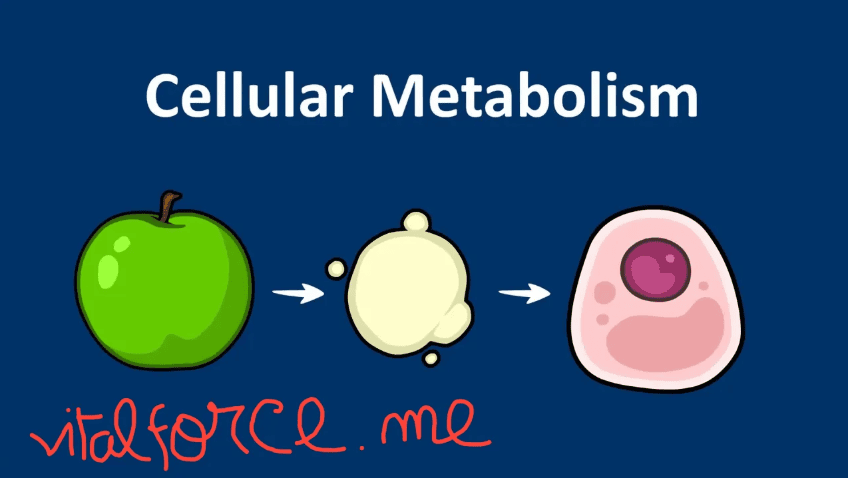
To make metabolism concrete, follow the materials from a piece of food. An apple provides a simple example, although the same general reasoning applies to a meal containing different nutrients.
Food does not enter your cells as recognizable pieces of apple, bread, or vegetables. Digestion first breaks it down into smaller substances that can be absorbed.
- Food is broken down in the digestive tract. Its components become smaller, absorbable molecules.
- Nutrients cross the intestinal lining. Absorbed materials enter the body’s transport system.
- The bloodstream distributes nutrients. This makes them available to cells throughout the body.
- Cells transform the incoming molecules. Their metabolic reactions process the materials for energy use, construction, and maintenance.

Is digestion the same as metabolism?
Not exactly. Digestion prepares food for absorption. Cellular metabolism concerns the reactions operating inside cells once materials are available to them.
The distinction helps explain why eating and absorbing nutrients are not the end of the process. Cells still need to transform those nutrients into something useful.
Some food-derived materials can become part of cellular components. Other material is processed through reactions that help supply energy. Still other material eventually leaves the body as waste.
The important idea is transformation. Your cells do not merely hold nutrients. They change them through a network of chemical reactions.
Step 3: Separate Building Reactions From Breakdown Reactions
Metabolism contains many different reactions. A useful first classification divides them into anabolism and catabolism.
These terms describe what reactions do to molecules, not whether the reactions are beneficial or harmful.
| Category | Basic action | Role in the cell |
|---|---|---|
| Anabolism | Combines smaller molecules into larger ones | Builds components needed for maintenance, growth, and repair |
| Catabolism | Breaks larger molecules into smaller ones | Processes materials and supports the supply of usable energy and smaller components |
Anabolism: assembling what the cell needs
Anabolic reactions join molecular components together. A cell can use this kind of chemistry to make replacement parts or build new material as it grows.
Think of anabolism as molecular assembly. Materials obtained from the environment are rearranged and combined into molecules belonging to the cell.
Catabolism: breaking material down for use
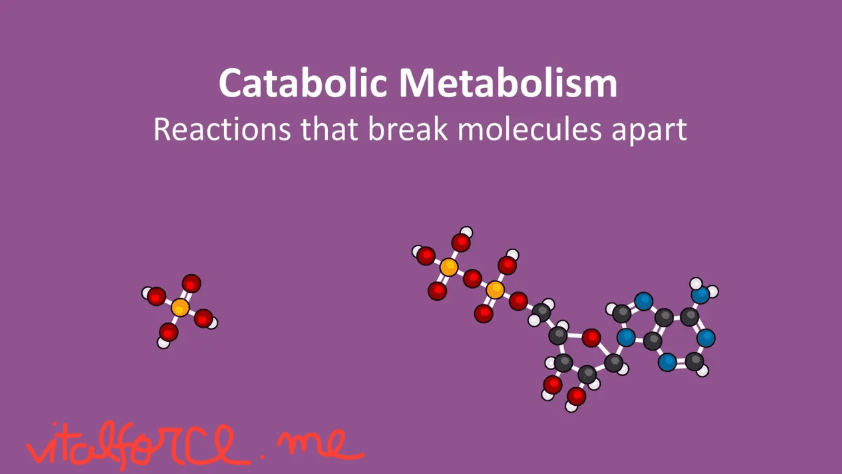
Catabolic reactions break molecules apart. In human cells, nutrients such as sugars and fats are broken down as part of the processes that support cellular work.
Breakdown is not necessarily damage. It is often an essential preparation step. A large incoming molecule may need to be taken apart before its components can enter other reactions.
Why are both categories necessary?
Building and breakdown are connected. Catabolic processes release materials, while anabolic processes use molecular components to build what the cell needs.
A simple memory aid is that anabolism assembles; catabolism breaks down. Use this distinction as a starting point rather than assuming that every metabolic pathway has only one purpose.
Step 4: Connect Metabolism to Energy and Tissue Renewal
Food has two closely related roles in cellular metabolism: it supplies materials and supports energy availability.
This is why describing food only as fuel gives an incomplete picture. Some of its molecular components can also become part of the body itself.
How cells use energy
Metabolic reactions help produce molecules that supply energy for cellular activities. Muscle cells use this energy to contract. Brain cells require it for the activities involved in thought.
The food you eat, therefore, does not directly power a movement. It passes through chemical transformations that make energy available in forms cells can use.
Why maintenance requires ongoing chemistry
Cells must also replace molecules that have worn out or been damaged. Metabolism supplies components and supports the reactions involved in that replacement.
Even tissues that look stable are chemically active. Skin and bone undergo renewal, although their components do not all turn over at the same rate.
A useful analogy is a whirlpool. Its recognizable shape can persist even while the water passing through it changes. Similarly, a cell can maintain its organization while materials continually enter, change, and leave.
Continuity of structure does not mean permanence of every molecule. This is one reason metabolism remains necessary for maintenance, not just for growth or visible movement.
Step 5: Learn to Read a Metabolic Pathway
A metabolic pathway is a connected sequence of chemical reactions. The product of one reaction can become material for another, linking individual changes into a larger process.
Some pathways form sequences. Others form cycles. Many connect with additional pathways, creating the extensive network called metabolism.
Start with three questions
When approaching a metabolic diagram, ask:
- What enters? Identify the starting materials or incoming molecules.
- What changes? Look for breakdown, assembly, or other transformations.
- What becomes available? Identify products, building components, energy-related molecules, or waste.
This approach is more useful for a beginner than trying to memorize every chemical name at once.
Use the citric acid cycle as an example
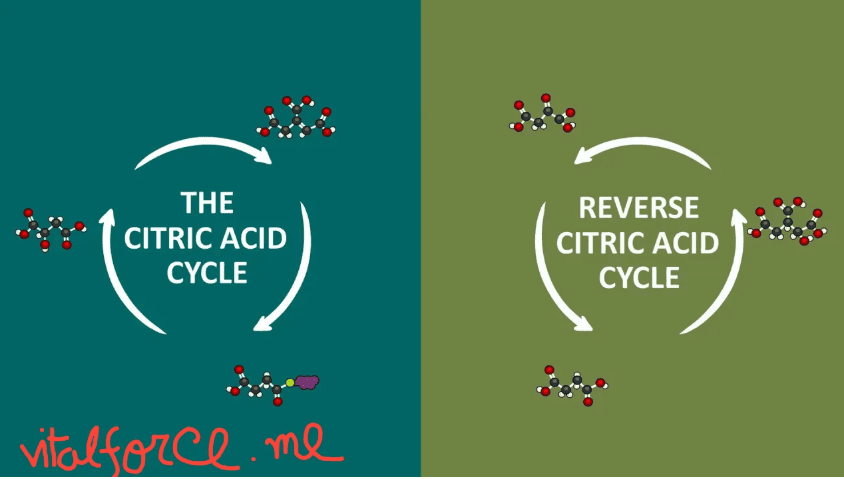
The citric acid cycle, also called the Krebs cycle, is a central metabolic pathway. Food-derived molecules feed into it after preparatory reactions.
Within the cycle, molecules undergo a series of transformations that regenerate the starting component. That regeneration allows the sequence to continue as additional material enters.
The circular shape can make the process seem unproductive. But the cycle is not an isolated loop that leaves everything unchanged. Other substances participate in its reactions, and useful products become available along the way.
- It contributes to the processes that make energy available to cells.
- It connects to reactions that supply precursors for cellular construction.
- It links the processing of different food-derived materials to a shared pathway.
The citric acid cycle, therefore, helps connect breakdown with construction. It is an important hub within metabolism, not a substitute for the whole network.
For further background, see the Britannica explanation of the tricarboxylic acid cycle, another name for this pathway.
Step 6: Recognize That Different Organisms Use Different Metabolic Routes
Human metabolism is one example of how living cells process materials. Other organisms have metabolic pathways that let them use substances unsuitable for humans.
Hydrogen sulfide illustrates the difference. It is toxic to people, yet certain bacteria can use it through their metabolism.
Whether a substance is useful to an organism depends partly on the chemical pathways that the organism possesses. Human food preferences are not a universal guide to what all life can use.
Shared chemistry does not mean identical metabolism
Forms of the citric acid cycle are widespread across living organisms. This broad distribution suggests that the pathway is ancient and biologically important.
However, widespread does not mean that every species has an identical pathway operating in an identical way.
What happens in the reverse citric acid cycle?
Some bacteria use a reverse version of the pathway. Rather than mainly processing larger carbon-containing molecules toward smaller products, this route incorporates carbon dioxide into larger carbon-containing molecules.
Those products can help provide the materials used to build sugars, fats, and amino acids through interconnected reactions.
The important contrast is the direction of transformation. Carbon dioxide can be an output of nutrient breakdown in one context and a source of carbon for construction in another.
This does not mean that simple starting materials spontaneously become food. The reverse pathway remains part of an organized metabolic system.
Step 7: Avoid Common Misconceptions About Metabolism
Several familiar descriptions are useful shortcuts, but they become misleading when treated as complete explanations.
“Metabolism only means burning fat”
Fat breakdown is one metabolic activity. Fat construction and storage also belong to metabolism, alongside many reactions unrelated to fat.
To understand the term, think about the cell’s entire chemical network rather than only one kind of nutrient.
“Catabolism is bad because it destroys molecules”
Breaking molecules down is often necessary. It helps cells process nutrients and break them down into smaller components for further use.
The distinction between anabolism and catabolism describes chemical action. It is not a ranking of good and bad processes.
“A cycle has no useful output”
A pathway can regenerate one component while transforming others. The repeated loop supports continuing chemical activity rather than simply undoing all previous work.
“All food goes straight into the citric acid cycle”
Nutrients undergo preparatory transformations. Different materials connect with metabolic pathways in different ways, so the cycle should not be pictured as receiving intact food.
“The citric acid cycle explains every metabolic reaction”
It is a central pathway within a much larger network. Likewise, carbon dioxide and water associated with overall nutrient processing should not be treated as a complete description of the cycle’s individual reactions.
Step 8: Apply the Definition to Everyday Examples and Bigger Questions
To check your understanding, return to a familiar activity such as eating lunch and moving your arm. Follow the materials and their changing roles.
- Before absorption, digestion prepares nutrients for transport.
- Inside cells, reactions transform incoming molecules.
- During construction, anabolic reactions assemble cellular material.
- During breakdown, catabolic reactions process molecules into smaller products.
- During movement, muscle cells use energy produced by metabolism.
- During maintenance, cells continue to replace and rebuild molecular components.
This checklist turns metabolism from an abstract term into a process you can follow. Ask what enters, what changes, and how the products support the cell.
Why does metabolism matter to the origin of life?
The same framework raises a deeper question: how did organized chemical networks first arise?
Some researchers propose that chemistry resembling the reverse citric acid cycle may have contributed to the emergence of early life. Its use of simple starting materials makes it relevant to investigations of early Earth chemistry.
This is a hypothesis, not a settled account of life’s origin. The presence of a pathway in modern organisms does not by itself establish exactly how the first cells formed.
Understanding metabolism may also help researchers consider where life could exist beyond Earth. Studying different ways of obtaining materials and energy broadens the possibilities beyond human-like biology.
The central lesson remains straightforward: metabolism is the chemistry through which cells use their surroundings to sustain themselves. Food processing, energy supply, construction, renewal, and waste production are connected parts of that living system.




Leave A Comment
You must be logged in to post a comment.